How to Build a New Habit: This Is Your Strategy Guide
Understanding how to build new habits, and how your current ones work, is useful for making progress in the parts of life you care about.
There is also a lot of information out there, and much of it is difficult to turn into something you can do. I wanted to put a few practical ideas in one place.
1. Start with an incredibly small habit
When most people struggle to build new habits, they say something like, “I just need more motivation.” Or, “I wish I had as much willpower as you do.”
Your motivation ebbs and flows. It rises and falls. BJ Fogg calls this the “motivation wave.”
Pick a new habit that is easy enough to do when your motivation is low. Start with five pushups per day. Start by meditating for one minute. Make it easy enough that you can get it done on an ordinary day.
You can do more when you want to. The small version gives you a commitment you can practice keeping.
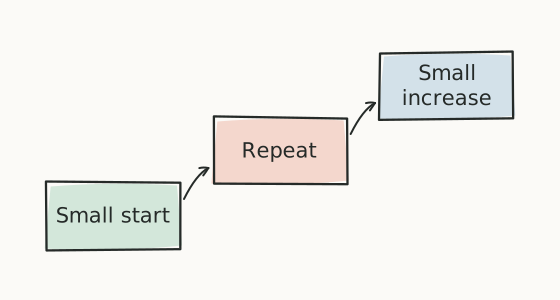
2. Increase your habit in very small ways
Start small and gradually improve. Small increases add up, and you have time to become familiar with the current version before adding to it.
You might add a repetition, a few minutes, or a little distance. There is no need to force an exact daily percentage. Choose an increase that leaves the routine manageable.
3. As you build up, break habits into chunks
It is important to keep each habit reasonable so that you can maintain momentum and make the behavior as easy as possible to accomplish.
Building up to twenty minutes of meditation? Split it into two segments of ten minutes at first.
Trying to do fifty pushups per day? Five sets of ten might be much easier as you make your way there.
The larger routine still has to fit into your day. Dividing it into pieces can make the next version easier to practice.

4. When you slip, get back on track quickly
People who perform well still make mistakes, commit errors, and get off track. Learning how to return is part of becoming consistent.
In a study of habit formation, missing a single opportunity to perform the behavior did not materially affect the process. That is a useful reminder when one missed day starts to feel like it has ruined everything.
Take some time to consider what will prevent your habit from happening. What are some things that are likely to get in your way? What are some daily interruptions that are likely to pull you off course? How can you work around these issues, or get back on track after they happen?
Give the next repetition a time and a place. Make the return concrete enough that you know how to begin.
5. Be patient. Stick to a pace you can sustain
Learning to be patient is perhaps the most difficult part. You can make a lot of progress by continuing at a pace that fits.
If you are adding weight in the gym, you should probably go slower than you think. If you are adding daily sales calls to your business, start with fewer than you expect to handle.
New habits should feel manageable, especially in the beginning. If you stay consistent and continue increasing the commitment, it will get challenging soon enough. Give the current version some time before deciding how much to add.