How Long Does It Actually Take to Form a New Habit?
Maxwell Maltz was a plastic surgeon in the 1950s when he began noticing a pattern among his patients.
After an operation, like a nose job, he believed patients often took about twenty-one days to get used to seeing their changed face. He also wrote about people adjusting to the loss of a limb. These were his observations about adjustment, and he began thinking about his own response to changes and new behaviors.
Maltz wrote: “These, and many other commonly observed phenomena tend to show that it requires a minimum of about 21 days for an old mental image to dissolve and a new one to jell.”
In 1960, he published that quote and his other thoughts on behavior change in Psycho-Cybernetics.
And that's when the problem started.
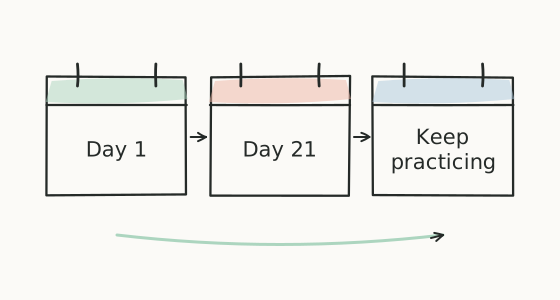
In the decades that followed, Maltz's work traveled through the self-help world. As more people recited his story, like a very long game of Telephone, people began to forget that he said “a minimum of about 21 days” and shortened it to, “It takes 21 days to form a new habit.”
That's how an observation became a much broader promise about forming habits. It's remarkable how often these timelines are quoted as statistical facts. If enough people say something enough times, others begin to repeat it as though it has been established.
It makes sense why the twenty-one-day idea would spread. It's easy to understand. The time frame is short enough to be inspiring and long enough to be believable. And who wouldn't like the idea of changing your life in just three weeks?
Maltz was describing what he thought he had observed. He also included the words “minimum” and “about.” Those qualifications disappeared along the way.
So what's the answer? How long does it take to form a habit? Is there any research to help us understand it? And what does this mean for you and me?
Looking at habit formation
In a study of habit formation, Phillippa Lally and her research team at University College London examined how long it takes for a repeated behavior to become more automatic.
The study followed ninety-six volunteers over a twelve-week period. Each person chose one new behavior and reported each day whether they did it and how automatic it felt.
Some people chose simple habits like drinking a bottle of water with lunch. Others chose more demanding tasks like running for fifteen minutes before dinner. At the end of the twelve weeks, the researchers analyzed how automatic the behaviors had become.
The figure most often quoted from the study is sixty-six days. That was the median estimate for reaching 95 percent of a person's eventual level of automaticity among the thirty-nine participants whose data fit the researchers' model well. The modeled estimates ranged from eighteen to 254 days. The study observed people for eighty-four days, so the longer estimates extended beyond the observation period.
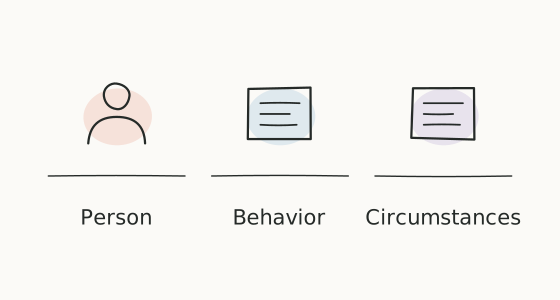
There was a lot of variation. The behavior, the person, and the circumstances mattered. Sixty-six days gives us a summary of part of this study. It would be a mistake to turn it into another universal deadline.
The researchers also found that “missing one opportunity to perform the behavior did not materially affect the habit formation process.” One missed occasion left room for the process to continue.
Finding encouragement in a longer timeline
Before you let this dishearten you, let's talk about three reasons why I find the research encouraging.
First, there is no reason to get down on yourself if you try something for a few weeks and it still takes thought. A behavior can take longer to become familiar. You can keep practicing and pay attention to what makes it easier to repeat.
Second, a single missed opportunity did not materially affect habit formation in this study. That gives us a reason to respond proportionately when a day goes wrong. Examine what happened and develop a way to get back on track.
Third, longer timelines help us think about the ongoing practice. All the twenty-one-day hype can make it easy to think, “I'll just do this and it'll be done.” A habit has to keep fitting into a life that changes. You learn where it belongs, what gets in the way, and which adjustments help you return.
Understanding this from the beginning makes it easier to manage your expectations and commit to small, incremental improvements. You can give the behavior time to become familiar and make changes as you learn what works.