How to Make Your Future Habits Easy
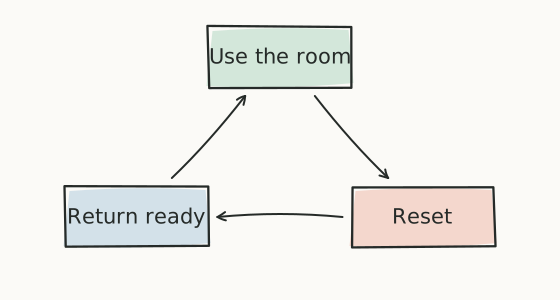
Oswald Nuckols, an IT developer from Natchez, Mississippi, has a simple strategy for making future habits easy. He calls it “resetting the room.”
When he finishes watching television, he places the remote back on the TV stand, arranges the pillows on the couch, and folds the blanket. When he leaves his car, he throws any trash away. Whenever he takes a shower, he wipes down the toilet while the shower is warming up. As he notes, the “perfect time to clean the toilet is right before you wash yourself in the shower anyway.”
The purpose is to prepare the room for the next action.
“When I walk into a room everything is in its right place,” Nuckols wrote. “Because I do this every day in every room, stuff always stays in good shape.” He calls himself “proactively lazy.” The preparation gives him time back later.
I've written about the power of the environment to shape your behavior. Resetting the room is one way to put that idea into practice. Let's talk about how to use it.
Priming the environment
Whenever you organize a space for its intended purpose, you are priming it to make the next action easy. This is one of the most practical and simple ways to improve your habits.
Consider a box of greeting cards presorted by occasion: birthday, sympathy, wedding, graduation, and more. Whenever a card is needed, you grab an appropriate one and send it off. Having the cards ready removes several steps from the act of sending one.
Compare that with hearing that someone has had a baby and thinking, “I should send a card.” Then weeks pass. By the time you remember to pick one up at the store, it feels too late. The habit was awkward to complete.
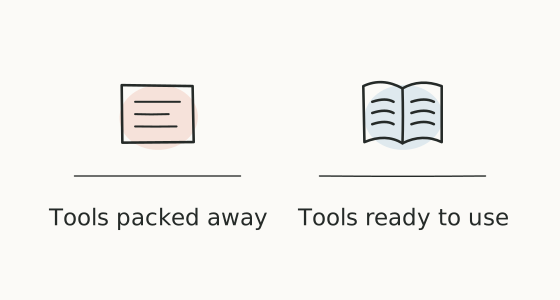
There are many ways to prime your environment so it's ready for immediate use. If you want to cook breakfast, place the skillet on the stove and lay out any plates and utensils you'll need the night before. When you wake up, part of the preparation is already done.
Here are some more:
- Want to draw more? Put your pencils, pens, notebooks, and drawing tools on top of your desk, within easy reach.
- Want to exercise? Set out your workout clothes, shoes, gym bag, and water bottle ahead of time.
- Want ready-to-eat options during the week? Chop fruits and vegetables on the weekend and store them in containers in the refrigerator.
These are simple ways to make the habit easier to choose. The materials are there when you need them. You can begin.
Add some friction to the habits you want to change
You can also invert this principle and prime the environment to make a behavior more difficult.
If you find yourself watching too much television, unplug it after each use. Only plug it back in when you can say out loud the name of the show you want to watch. That gives you a pause before turning on Netflix and “just finding something.”
If that doesn't do it, you can take it a step further. Unplug the television and take the batteries out of the remote after each use, so it takes an extra ten seconds to turn it back on. And if you're really hard-core, move the television out of the living room and into a closet. You'll have to want to watch something enough to take it out.
The same idea works with a phone. When it's right next to you, checking it takes almost no effort. Leave it in a different room for a period of work and you have to get up to retrieve it. That small inconvenience gives the impulse a chance to pass.
If another room isn't enough, ask someone you trust to hold it for a few hours. A coworker could keep it at their desk in the morning and give it back at lunch. Choose an arrangement that fits the access you actually need during that time.
It is remarkable how little friction can change an ordinary habit. Put a drink at the back of the fridge and you may stop reaching for it simply because you see it. Delete a social media app and checking it now requires opening a browser or downloading it again.
These changes are unlikely to address an addiction on their own. For everyday habits, a little friction can be enough to interrupt an action that was happening almost automatically.
Imagine the cumulative effect of several changes like this. The things you want to use are ready. The things that repeatedly distract you take a little effort to reach.
Look at the room you are leaving at the end of a session. What would make returning easier? Put the tools together. Leave the next page open. Set out what you will need.