How to Make Little Habits (Like Flossing) Easier to Remember
There is a simple strategy for making a habit easier to begin: put the reminder where you will see it at the moment you need it.
This little tactic can take only a few seconds to arrange. The effect becomes more interesting when you notice how many actions are already being prompted by the things around you.
The impact of your environment
How much time do you spend thinking about how the environment you live in, your home, your office, and your community, shapes the actions you take?
For a long time, this was easy for me to overlook. We spend so much time thinking about what we intend to do that we can forget to look at the room where we intend to do it.
Starting a new habit takes effort. The environment can add to that effort or make the first step easier. Where you live, where you work, and where you socialize are arranged in particular ways. Some of those arrangements will fit your goals better than others.
The Visibility Method
Many of the actions we take each day are responses to the way things are organized around us.
Take a plate of cookies on the counter. You walk into the kitchen and eat one (or five). Perhaps you had barely thought about cookies until you saw them. Now they are right there.
You can use that same relationship between seeing and doing to arrange the things you want to remember. The basic idea is simple: if you want to do something, make it visible. Put the reminder in a location where you will encounter it when it is time to act.
For example, someone who takes a vitamin with a meal might keep it where they see it when they prepare their food. A book can go on the chair where you like to sit. The object itself becomes part of the reminder.
I think of this as the Visibility Method: make the things you want to do easier to see, and move the things that keep distracting you out of the places where they constantly catch your attention.
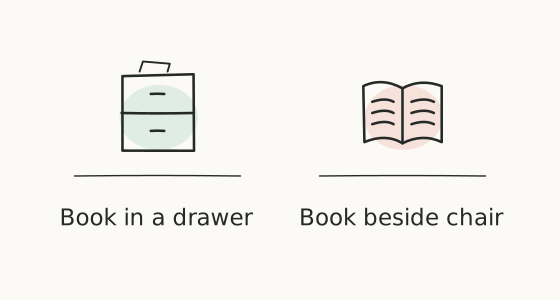
Here are two more examples.
Adding a step to an unwanted habit
If you want to make a familiar action less automatic, add a little effort between noticing it and doing it.
Remember the cookies on the counter? Put them in a container and place them in the pantry. Now walking into the kitchen gives you a different view. If you want a cookie, you can open the pantry and get one. You have removed the repeated invitation that was sitting in front of you.
The pantry door seems like a pretty insignificant barrier. Small barriers can still change what happens when you are moving through a familiar routine without thinking much about it.
The same idea applies to the phone on your desk. If you keep picking it up between sentences, put it somewhere else while you write. Getting it now involves standing up and leaving the work.
Removing a step from a habit you want
If you want to make it easier to create a habit, decrease the number of steps required to begin it.
Flossing makes this easy to see. Someone may already brush their teeth twice a day and still struggle to remember the floss. There can be all sorts of reasons. Logical things (the floss is in a drawer). Weirdly specific things (they dislike wrapping it around their fingers).
One adjustment is to try pre-made flossers if they suit the person's routine. That makes the action simpler and removes the step of wrapping a length of floss around the fingers.
Another is to put the floss beside the toothbrush. A small bowl can keep the flossers together, right where they will be used. There is no separate task of remembering to take them out of the drawer.
Even the lid can matter. If the contents stay hidden, the bowl may become another object you look past. Taking the lid off makes the reminder visible each time you brush your teeth.
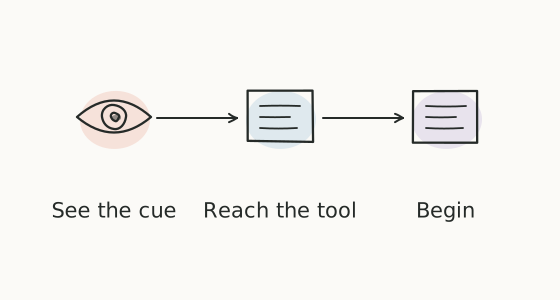
Trust me, I know this extended discussion about flossing sounds ridiculous.
The items we see around our homes, our offices, and our community can act as triggers for familiar habits. We can pay attention to that and arrange a few of them on purpose.
Putting the idea into practice
There are all sorts of ways to make a reminder visible where you can use it.
Want to remember your water while you work? Put the bottle on your desk where you can reach it.
Wish you would read more? Place a book in the same spot where you usually keep the TV remote control.
Want to take more photographs? Put your camera next to your keys. When you leave the house, it is there to remind you. You can take a photo of something you notice along the way. It can be anything.
Having trouble getting ready for a morning run? Set your clothes and running shoes out the night before and place them by your bed. When your alarm goes off, your clothes will be the first thing you see.
Keep forgetting to pause during the workday? A calendar reminder can give you a moment to look away from the screen and take a few comfortable breaths.
The location should fit the action. A reminder in the hallway may be easy to see and easy to forget by the time you reach the desk. Put it where you have what you need to begin.