25,000 Mornings: 8 Ways to Get More Out of Them
Twenty-five thousand mornings is one way to picture an adult life.
If you live to eighty-six and count adulthood from eighteen, that's sixty-eight years. Multiply sixty-eight by 365 and you get 24,820 days. About 25,000 mornings.
Some people have fewer. Some have more. It is a rough way of putting a number on all the times you open your eyes, face the day, and decide what to do next.
I don't know about you, but I've let a lot of those mornings slip by.
It makes me think about how I could develop a better morning routine. I still have a lot to learn, but here are some strategies that can help.
1. Pay attention to your energy
If you take a moment to think about it, you'll probably realize that you are better at doing certain tasks at certain times.
For example, if your creative energy is highest in the morning, that's a useful time to do your writing. You could block out your afternoons for interviews, phone calls, and emails. Those tasks may need a different kind of attention. And if you tend to have your best workouts in the late afternoon or early evening, that could be when you head to the gym.
What type of energy do you have in the morning? What task is that energy best suited for? You can use what you notice about your own day to answer those questions.
2. Prepare the night before
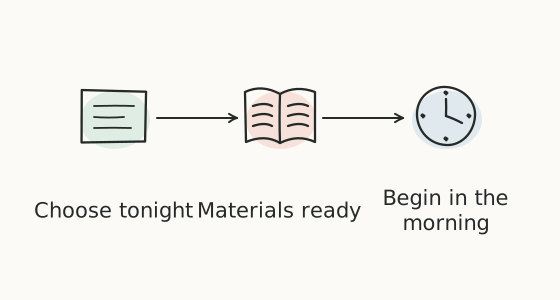
Spend a few minutes each night organizing what you want to do tomorrow.
For writing, you could outline the article you're going to write the next day and develop a short list of the most important items to accomplish. Leave the draft and any notes you need where you can find them.
Ten minutes the night before can save you from spending the first part of the morning working out where to begin.
3. Give email a time of its own
Try leaving your email alone for the first part of the day, if your work allows it.
Sounds simple. The urge to open the inbox can be hard to shake. Much of what arrives can wait a few hours. Leaving email alone for a while gives you an opening to do something important before you begin responding to requests.
Noon may be too late for the responsibilities you have. Perhaps you need an early check, then an hour with the inbox closed. Choose an arrangement that lets people reach you when they need to and gives your own work some room.
4. Turn your phone off and leave it in another room
Or, at the very least, put it somewhere that is out of sight.
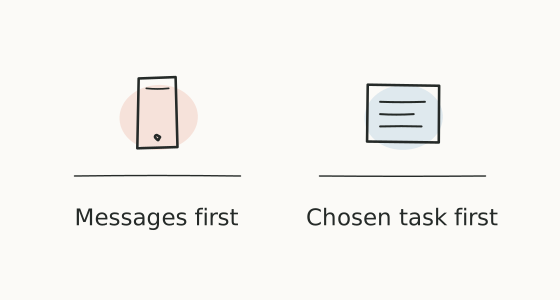
This reduces the urge to check text messages, social media, and so on. This simple strategy makes it harder to slip into half-work, where you waste time dividing your attention among unrelated tasks.
5. Work somewhere comfortable
Have you ever noticed how you feel groggy and sluggish in a hot room? Adjusting the temperature or moving to a more comfortable place may help.
There is no reason to make the room unpleasantly cold. The useful thing is noticing when the physical space is making concentration harder than it needs to be.
6. Sit comfortably, and move when you need to
It is easy to end up hunched over while staring at a screen and typing, especially when you have been working for a while.
Adjust the chair, change position, or stand up for a few minutes. Give yourself room to breathe comfortably. A pillow or another adjustment may help you find a position that feels better.
7. Make breakfast easier to decide on
Take a moment to think about how much time people spend thinking about, planning, and preparing food.
If the morning feels crowded, choosing breakfast ahead of time or having something familiar ready can remove a few decisions. You can still take time to eat and enjoy it. The useful part is having less to organize while you are trying to begin the day.
This will look different from one person to another. A morning routine should leave room for what helps you feel able to work.
8. Develop a “pre-game routine” to start your day
Some people start by pouring a glass of water. Some kick off their day with ten minutes of meditation. You could begin with a walk, or by opening the notebook you left on the desk.
Have a sequence that starts your morning ritual. This tiny routine signals that it's time to get into work mode or exercise mode or whatever mode you need to be in to accomplish your task. A pre-game routine can help you overcome a lack of motivation and get things done even when you don't feel like it.
The power of a morning routine
A morning routine gives you a repeated opportunity to spend time on something that matters to you.
Jack LaLanne is an extreme example. In a 2007 interview, he described a daily routine of lifting weights for ninety minutes and spending another thirty minutes in the pool. He was nearly ninety-three at the time.
That amount of training would be a lot for most people. What interests me is the recurring place it had in his day. The activity was already there when the morning arrived.
Your version might be breakfast and a few pages, a walk, or time with an essay before opening email. Try a small sequence that fits the responsibilities you have, then see what the morning is like when you use it.