How to Make Steady Progress Toward Your Goals
If you're anything like the typical human, then you have dreams and goals in your life. In fact, there are probably many things, large and small, that you would like to accomplish.
That's great, but there is one common mistake we often make when it comes to setting goals.
We set a deadline and leave the schedule unspecified.
We focus on the end goal that we want to achieve and the deadline we want to do it by. We say things like, “I want to lose twenty pounds by the summer” or “I want to add fifty pounds to my bench press in the next twelve weeks.”
The problem with this is that if we don't hit the arbitrary timeline that we set in the beginning, then we feel like a failure, even if we are better off than we were at the start. The end result, sadly, is that we often give up if we don't reach our goal by the initial deadline.
The power of setting a schedule
Choose a goal that is important to you and then set a schedule to work toward it consistently.
A deadline may still be useful, or necessary because someone else needs the work at a particular time. The schedule is what gives the work a place to happen.
That might sound like a small shift. Here is the idea in practice.
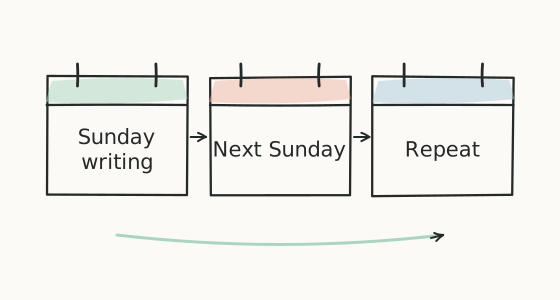
Example 1: writing
Imagine a writer who publishes a new article every Monday and Thursday.
Sometimes the article is shorter than expected, sometimes it isn't as compelling as the writer had hoped, and sometimes it isn't as useful as it could be. The schedule keeps bringing the writer back to the work, with another chance to learn from it.
Now imagine setting only a deadline, like “get 1,000 subscribers in twelve weeks.” If the writer doesn't reach that goal, they may feel like a failure. Yet the number says very little about whether they have developed a workable writing routine or improved the articles.
For my own writing, there is already a lot to return to: notes, unfinished essays, old projects, things I have been thinking about for years. A recurring time with that material gives me a concrete next step. Read the piece. Work with what is actually there. Leave enough time to keep its substance and voice.
Example 2: exercise
Imagine deciding that you want to do one hundred pushups in a row with strict form. When you try it the first time, you only get thirty-six.
You might set a deadline for yourself: “Do one hundred pushups by December 31.”
You could also decide to set a schedule for your workouts. Monday, Wednesday, and Friday, for example, with the amount of work and recovery suited to your current ability.
There doesn't have to be a new personal record in every single workout. The immediate goal is to do the planned session, track what happens, and adjust as you learn how your body responds.
Focus on the practice
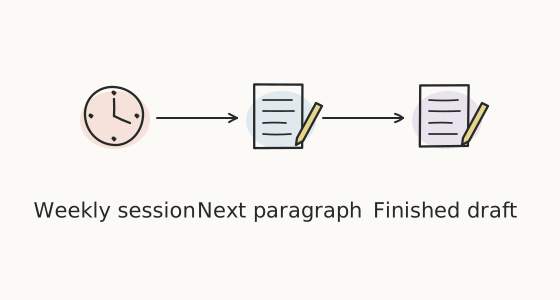
Do you see what the two examples above have in common? In both cases, writing and exercise, there is a schedule that keeps bringing you back to the activity.
People who get good at something practice the things that are important to them on a consistent basis. Weightlifters return to the gym. Writers sit down at the keyboard. And this same principle applies to many of the things leaders, parents, managers, musicians, and doctors want to do better.
The schedule is your friend. You can't predict when you'll have a stroke of genius and write a moving story, paint a beautiful portrait, or make an incredible picture. The schedule can make sure that you're working when an idea arrives.
You can't predict when your body feels like setting a new personal record. A schedule gives you regular opportunities to train, with room for recovery.
We're talking about practice. A session may be ordinary. You may spend it finding a problem in the work. When you return, you have something to work on.