3 Simple Ways to Make Exercise a Habit
A lot of people want to know how to get motivated to work out and build an exercise habit that sticks.
Of course, wanting to make exercise a habit and actually doing it are two different things. Changing your behavior is difficult. Living a new type of lifestyle is hard. This is especially true when you throw in very personal feelings about body image and self-worth.
There are some strategies that can make it easier to stick with an exercise habit. Here are three simple places to begin.
1. Develop a ritual to make starting easier
Habits are behaviors that you repeat over and over again, which means they are also behaviors that you start over and over again. In other words, if you don't consistently get started, then you won't have a habit. In many ways, building new habits is an exercise in getting started time after time.
This means that if you can find a way to make getting started easier, then you can find a way to make building a habit easier. This is why rituals and routines are so important. If you can develop a ritual that makes starting your workout familiar and automatic, then it will be easier to follow through.
Choreographer Twyla Tharp's ritual of hailing a cab to the gym is a good example. The familiar first action gets the rest of the routine moving.
You can start building your own ritual by putting your exercise habit after a current habit or by setting a schedule for yourself. For example, you could set your intention to exercise by filling out this sentence:
“During the next week, I will exercise on [DAY] at [TIME OF DAY] at/in [PLACE].”
This is called an implementation intention. In one two-week study, participants who made a specific exercise plan after a motivational intervention were much more likely to report exercising in the following week than the comparison groups. It is a useful reason to make the plan concrete; the short study does not tell us how long the habit will last.
2. Start with an exercise that is ridiculously small
A useful way to make exercise a habit is to start with something easy enough to do even when you are running low on motivation. In the words of Leo Babauta, start with something that is “so easy you can't say no.”
Here's one strategy that you can use in the beginning: find a way to get started in just two minutes.
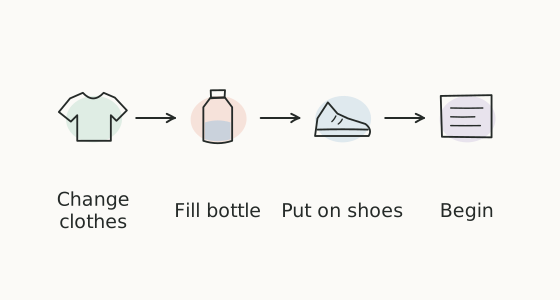
Struggling to find motivation to go for a run? Fill up your water bottle and put on your running shoes. That's the starting routine. Often, this little two-minute start will be enough to help you take the next step.
You can make the first bit of movement small too. Walk for a few minutes. Do one comfortable set. Give yourself an entrance to the activity that you are willing to use again.
3. Focus on the habit first and the results later
The typical approach to diet and exercise is to focus on results first. Most people start with some type of goal. “I want to lose twenty pounds in the next four months.” Or, “I want to squat fifty pounds more six months from now.”
It helps to give the routine itself some attention. In the beginning, you are establishing a new normal and finding a way to exercise that fits into your life. Once that feels familiar, you can gradually adjust the work.
One way to do this is to set an upper limit on your behavior.
Mitch, a man who shared his experience of building an exercise habit, set a rule for himself where he couldn't stay in the gym for more than five minutes at the beginning. He had to go every day, but he wasn't allowed to stay for six minutes. He was focused on making the trip familiar. After doing that for a month or two, he had established a routine of going to the gym and started to focus on doing more difficult workouts.
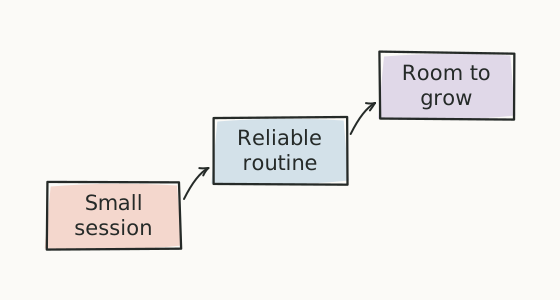
His account also included losing more than one hundred pounds over time, with changes to his diet and lifestyle as well as exercise. The five-minute visits were a way to begin. They gave him a routine he could later build on.
Once you have a familiar exercise routine, there are many ways to develop it. You can increase the length, practice a new skill, or adjust the difficulty. The first version only needs to give you a workable place to start.