How to Break a Bad Habit and Replace It With a Good One
Bad habits interrupt your life and prevent you from accomplishing your goals. They can affect your health, mentally and physically. And they waste your time and energy.
So why do we still do them? And is there anything you can do about it?
Let's focus on the practice of making changes in the real world. I certainly don't have all of the answers, but I'll share what I've learned about how to break a bad habit.
What causes bad habits?
Stress and boredom are two common places to look.
Often, bad habits are a way of dealing with stress and boredom. Everything from biting your nails to overspending on a shopping spree to wasting time on the internet can be a response to those feelings.
You can teach yourself new ways to deal with stress and boredom, which you can then substitute in place of the habit you want to change.
Of course, sometimes the stress or boredom on the surface comes from deeper issues. These issues can be tough to think about. Are there certain beliefs or reasons behind the habit? Is there something deeper, a fear, an event, or a difficult situation, that is causing you to hold on to it?
Recognizing the causes of your habits gives you a useful place to begin.
Find a replacement that meets the need
Many of the habits you have right now are in your life for a reason. In some way, these behaviors provide a benefit to you, even if they are bad for you in other ways.
Sometimes the benefit is emotional. In many cases, the habit is a way to cope with stress. For example, biting your nails, tapping your foot, or clenching your jaw.
These reasons extend to smaller habits as well.
For example, opening your email inbox as soon as you turn on your computer might make you feel connected. At the same time, looking at all of those emails divides your attention and can overwhelm you with things to respond to. It quiets the feeling that you're “missing out,” and so you do it again.
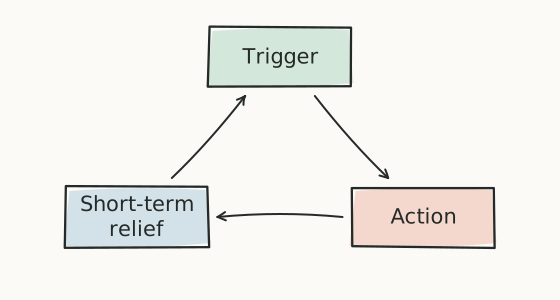
Because a bad habit provides some type of benefit in your life, it can be very difficult to simply eliminate it. This is why advice like “just stop doing it” rarely helps much.
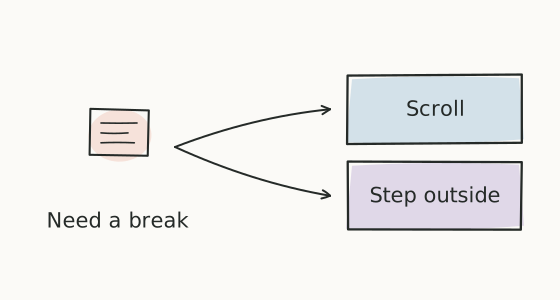
A replacement behavior can address the same need. If you need a break, choose a way to take one. If you want to feel connected, think about the kind of contact that would help. If you cut out the behavior while leaving the need unmet, sticking to a routine of “just don't do it” can be difficult.
Choose a substitute for the habit
You need a plan ahead of time for how you will respond when you face the stress or boredom that prompts the behavior.
What are you going to do when Facebook is calling you to procrastinate? Write one sentence for work before opening it. What will you do when you notice tension? Pause for a few slow breaths. If you've been sitting for hours, you could get up and walk for a few minutes.
Whatever it is and whatever you're dealing with, have a specific response ready. You can learn from trying it and change it if it does very little for you.
Cut out the triggers you can change
If the first thing you do when you sit on the couch is pick up the TV remote, then hide the remote in a closet in a different room. If a shopping app repeatedly catches your attention, sign out or remove it from your first screen. Make it easier on yourself by changing the things that keep prompting the habit.
Right now, your environment may be making the behavior easy. Change the environment and you can change what happens next.
Join forces with somebody
How often do you try to make a change in private? You keep it to yourself. That way nobody will see you fail, right?
Pair up with someone. The two of you can hold each other accountable and celebrate your victories together. Knowing that someone expects to hear how it went can be a useful reminder.
Surround yourself with people who live in ways you want to learn from. A friend who makes time for exercise, writing, or cooking may have a practical idea you can try. You get to see the ordinary details of how they do it.
Picture the response you want to practice
Visualize yourself doing the action you have chosen. See yourself closing the app, getting up for a walk, or returning to the paragraph. Make the scene specific enough that you know what to practice.
You may also be able to remember a time when the habit played a smaller role in your life. What was different? What did you do when you were bored or stressed? Something from that period may be useful now.
One thing about changing habits is that it's easy to judge yourself for failing to act as you intended. Every time you slip up, it's easy to tell yourself how much you suck.
Describe the action itself. “I spent forty minutes scrolling after dinner” gives you something to examine. You can look at what happened, change the arrangement, and choose the next opportunity to practice.
We all slip up every now and then. Plan for the return. If you expect to be tired after dinner, decide where the phone will be and what you would like to do with that time.
Where to go from here
If you're looking for the first step to breaking a habit, I'd suggest starting with awareness.
It's easy to get caught up in how you feel about your habits. You can make yourself feel guilty or spend your time dreaming about how you wish things were. Those thoughts can take your attention away from what's actually happening.
Look at the behavior closely:
- When does the habit actually happen?
- How many times do you do it each day?
- Where are you?
- Who are you with?
- What triggers the behavior and causes it to start?
Simply tracking these issues will make you more aware of the behavior and give you ideas for changing it.
Here's a simple way to start: track how many times per day the habit happens. Put a piece of paper in your pocket and carry a pen. Each time it happens, mark it down on the paper. At the end of the day, count the tally marks and see what your total is.
For the first few days, the goal is to be aware of when it happens and how often it happens. Get a clear picture of the pattern. Then choose a substitute or change a cue and see what happens the next time.