Avoid the Second Mistake
So often, we make the mistake of believing that sticking to good habits is an all-or-nothing game. I say “we” because I've been there before as well.
We act like missing one day of writing means we simply weren't meant to be a writer. We use our lack of motivation to work out as evidence that we don't have the willpower to make change happen.
Habits are behaviors we repeat consistently. A missed day can be part of that longer pattern. What happens after the miss deserves our attention.
The second mistake
In a study published in the European Journal of Social Psychology, missing one opportunity to perform a behavior did not materially affect habit formation. The participants were practicing new behaviors over twelve weeks. One interruption left room for the process to continue.
People who perform at a high level make mistakes all the time. Athletes skip workouts. CEOs forget to meditate. Artists loaf around in bed all day and ignore their craft. These people are human, just like you and me. There are many points during their careers when they make a mistake, skip a session, and approach their tasks with the enthusiasm of a sleep-deprived manatee.
They still have another opportunity to practice.
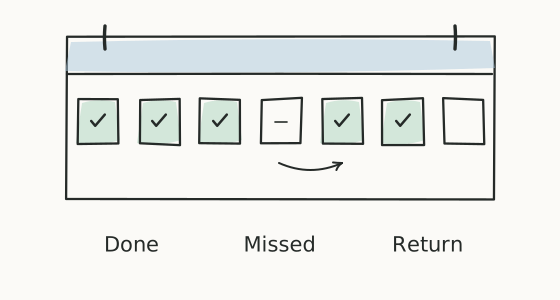
“Avoid the second mistake” is a reminder to put some care into the return. If you miss a session, make the next opportunity concrete before the interruption becomes the new routine.
Two missed days aren't a magical threshold. Illness or a difficult period can take longer. The useful question is when you can reasonably return and how to make that return easier.
Put your energy toward starting
If you make a mistake or forget to practice a new habit, it can be easy to convince yourself that you need to do twice as much work to make up for it next time. That makes the return more demanding.
I find it more useful to release the focus on results and direct your energy toward getting started. Focus on getting back into the swing of things. Give yourself a first action you can do in two minutes: open the document, put on your shoes, set out the materials.
The next session can be ordinary. Beginning it gives you somewhere to continue from.
Set a schedule for the return
Many people never get around to building new habits because they are always wondering when they will be motivated to do the new habit.
Give the behavior a time and a place. If the old time keeps failing, look at why. You may have planned to work in an evening that is consistently crowded. A shorter session at lunch might fit.
Set out what you need. Make it easy to recognize the next opportunity when it arrives.
Look at what took you off track
Some interruptions can't be avoided. There are also daily distractions you can reduce.
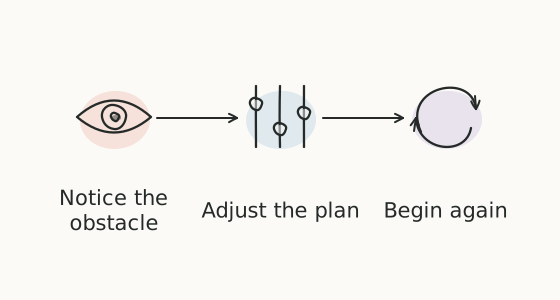
If you find yourself missing a habit, then take a moment to determine why that happened today. There is no need to judge yourself. Examine your day with open eyes and determine what took you off course. Did something run long? Did you forget? Did your phone take the half hour you had available?
Once you begin to discover what takes you off course, you can change what is within your control. Put the phone somewhere else. Make the session smaller. Choose a different time. Give yourself a clear way to start again.