Motivation Is Overvalued. Environment Often Matters More.
It can be tempting to blame failure on a lack of willpower or a scarcity of talent, and to attribute success to hard work, effort, and grit.
To be sure, those things matter. What is interesting, however, is that if you examine how human behavior has been shaped over time, you discover that motivation (and even talent) is often overvalued. In many cases, the environment matters more.
Let me share an example.
The shape of human behavior
In his book, Guns, Germs, and Steel, Jared Diamond points out a simple fact: different continents have different shapes. At first glance, this statement seems rather obvious and unimportant, but he argues that it had a profound impact on human behavior.
The primary axis of the Americas runs from north to south. That is, the landmass of North and South America tends to be tall and thin rather than wide and fat. The same is generally true for Africa. Meanwhile, the landmass that makes up Europe, Asia, and the Middle East is the opposite. This massive stretch of land tends to be more east-west in shape. According to Diamond, this difference in shape played a significant role in the spread of agriculture over the centuries.
When agriculture began to spread around the globe, farmers often had an easier time expanding along east-west routes than along north-south ones. Locations along the same latitude can share similar seasonal patterns and growing conditions. In Diamond's account, this helped crops spread across Europe and Asia.
By comparison, the climate varies greatly when traveling from north to south. Just imagine how different the weather is in Florida compared to Canada. You can be the most talented farmer in the world, but it won't help you grow Florida oranges in the Canadian winter. Snow is a poor substitute for soil. In order to spread crops along north-south routes, farmers would need to find plants suited to the changing climate.
Diamond describes agriculture spreading faster across parts of Asia and Europe than it did up and down the Americas. Over the span of centuries, this difference had a very big impact. Increased food production allowed for more rapid population growth. With more people, these cultures were able to build stronger armies and were better equipped to develop new technologies. A crop spread slightly farther, a population grew slightly faster, and those changes compounded over time.
This is one argument about a complicated history. The part that matters here is easy to overlook: the farmer's environment changes what the farmer can do.
The invisible hand
Environment is the invisible hand that shapes human behavior. We tend to believe our habits are a product of our motivation, talent, and effort. Certainly, these qualities matter. But the surprising thing is how much your environment can shape the results of that effort, especially over a long time period.
There is no reason to assume that the farmers of Europe and Asia were more talented or more motivated than farmers in the rest of the world. Their surroundings gave them different opportunities. If you want to improve your odds of success, it helps to operate in an environment that makes the useful action easier.
How to design a better environment
There are many ways to design an environment that promotes the habits you want.
First, automate good decisions. Whenever possible, design an environment that makes a decision easier to follow through on. Using software to block social media sites, for example, can help with procrastination. You decide when you want to work, set the block, and give yourself a period of time with fewer opportunities to wander off.
Second, get in the flow. PetSmart's checkout donation prompt is a useful example. A customer is already paying for a purchase when the screen asks if they want to donate to help homeless animals. The opportunity arrives inside something they are already doing.
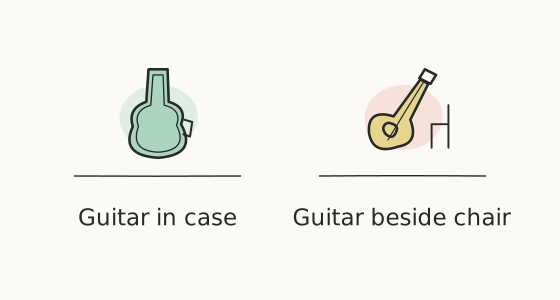
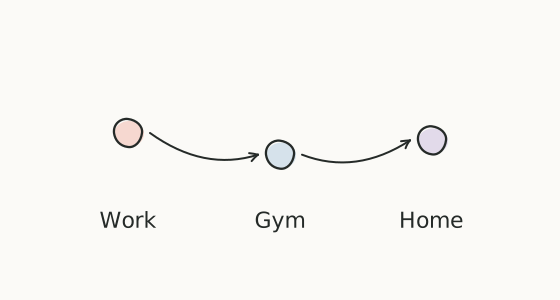
You can apply a similar strategy by designing an environment where good habits “get in the flow” of your normal behaviors. For example, if you want to practice a musical instrument, you could place it in the middle of your living room. Similarly, you are more likely to go to the gym if it is literally on the way home from work than if the gym is only five minutes away, but in the opposite direction of your commute. Whenever possible, design your habits so they fit in the flow of your current patterns.
Third, subtract the negative influences. Look for the barriers you can remove. Rearranging a workspace can save time by eliminating unnecessary turning, bending, and swiveling. The same idea applies at home. Put the things you use where you use them. Move a recurring distraction out of reach. If a food you are trying to eat less often is always sitting on the counter, put it somewhere less visible.
The luck of the environment
We are quick to blame our environment when things go poorly. If you lose a job, it's because the economy sucks. If you lose a game, it's because the officiating was bad. If you're late to work, it's because traffic was insane.
When we win, however, we ignore the environment completely. If you land a job, it's because you were talented and likable. If you win a game, it's because you played better. If you're early for a meeting, it's because you are organized and prompt.
It is important to remember that the environment drives our good behaviors as well as our bad ones. People who seem to stick to good habits with ease are often benefiting from an environment that makes those behaviors easier.
Meanwhile, people who struggle could be fighting an uphill battle against their environment. Before deciding that someone needs more willpower, it helps to look at what they are dealing with each day.