The 5 Triggers That Make New Habits Stick
One way to describe the process of building a habit is through four steps: cue, craving, response, and reward.
Each phase is important for building new habits. Today I'd like to discuss the first factor: habit cues, or triggers.
There are five common ways that a new habit can be triggered. If you understand each of them, then you can select the right one for the particular habit that you are working on.
Here's what you need to know about each habit cue.
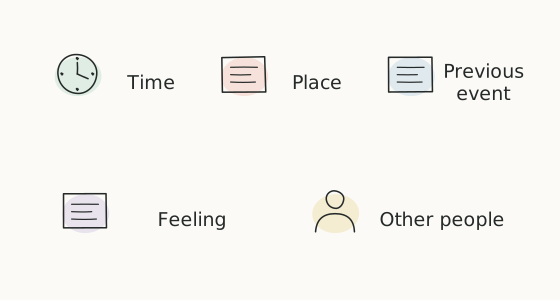
Cue 1: Time
Time is perhaps the most common way to trigger a new habit. Common morning habits are just one example. Waking up in the morning usually triggers a cascade of habits: go to the bathroom, take a shower, brush your teeth, get dressed, make a cup of coffee, etc.
There are also less commonly recognized ways that time triggers our behavior. For example, if you pay attention you may notice that you repeat certain tasks mindlessly at different points during the day: heading off to get a snack at the same time each afternoon, taking a smoking break at the same time each morning, and so on.
If these are habits you want to change, then you may want to take stock of how you feel at this time of day. In many cases, your habits are a signal of how you feel. Bored? Maybe your afternoon snacking habit is a way of breaking up the monotony of the day. Feeling lonely? Maybe your smoking break is a way to connect with fellow coworkers.
If you understand why these habits pop up at the same time each day, it can become easier to find another way to meet that need.
How to use it: Time-based cues can help you stick with routines over and over again. A writer might choose to publish an article every Monday and Thursday. The time and date drive the pattern. When the time arrives, there is a specific behavior to begin. You can use the same approach for a weekly review, a walk, or a session with a project.
Cue 2: Location
If you have ever walked into your kitchen, seen a plate of cookies on the counter, and eaten them just because they are there in front of you, then you understand the power of location on our behavior.
In my opinion, location is one of the most powerful and least recognized drivers of mindless habits. In many cases, our habits and behaviors are simply a response to the environment that surrounds us. The hospital cafeteria study on water and soft drinks is one example of how our environment can influence the choices we make.
We can also create location-based cues. Research by David Neal and Wendy Wood has explored the connection between familiar contexts and habitual behavior. A change of context can create an opening for a new routine.
One way to understand this is that we mentally assign habits to a particular location. The places you're familiar with, your home or your office, already have behaviors, habits, and routines associated with them. If you want to build new habits in these familiar locations, the existing cues may keep pulling you toward the old routine.
A new location gives you a different set of cues to work with. Think about how different reading feels at a library table compared with sitting in the chair where you usually watch television.
How to use it: When you arrive at the gym, head to the same spot to get ready, change into your lifting gear, and start your warmup. This location becomes a simple cue for the pre-workout routine. There are bound to be days when you don't feel like exercising. Having a familiar place to begin can help you get into the routine.
Cue 3: Preceding event
Many habits are a response to something else that happens in your life. Your phone buzzes, so you pick it up to check your latest text message. The little notification bar lights up on Facebook, so you click it to see what it signals. These are examples of habits triggered by a preceding event.
When it comes to cues for building new habits, I find preceding events to be especially useful. You can develop all sorts of ways to tie new habits into something you already do. For example: “When I make my morning cup of coffee, I will meditate for one minute.”
How to use it: Each night, when you sit down to eat dinner, name one thing you were grateful for that day. The beginning of dinner is the reminder. The action is small enough to fit into the moment. The smaller the habit, the easier it is to build into your life.
Cue 4: Emotional state
An emotional state can also be a cue. You may default to online shopping when you feel bored. You may reach for your phone when you feel uncomfortable. The feeling sets the behavior in motion.
Although emotions are common cues for our behavior, I find them harder to use deliberately when building good habits. Mostly, I think this is because you need to be consciously aware of the emotion as you are experiencing it. You have to be emotional and aware at the same time, and that can be hard to do.
How to use it: Practice noticing when you are holding tension in your body. When you notice it, pause for a few slow breaths. One possible pattern is three seconds in, a one-second pause, and five seconds out, repeated a few times if that feels comfortable. It gives you a small response to practice when you recognize the cue.
Cue 5: Other people
It is probably no surprise that the people you surround yourself with can play a role in your habits and behaviors.
One way to use this is to spend time with people who have habits you want to develop. You get to see the behavior as an ordinary part of someone's life. A friend who walks regularly can make a walk the obvious thing to do when you meet. People who make things can make working on a project feel like a normal way to spend an evening.
You can see the same effect when a group goes out for drinks. Someone who wasn't particularly yearning for a beer may order one along with everybody else. Why get one? It can be a response to the environment and the people around them.
How to use it: Choose an activity you want to repeat and arrange to do it with someone who enjoys it. Give the meeting a time and place. The person becomes part of the reminder to show up.
Before you choose your habit cue
Whatever cue you choose, make it specific and immediately actionable.
Let's say you want to build a habit of doing ten pushups each day at lunchtime. You might start with a time-based cue: “During my lunch break each day, I'll do ten pushups.”
Do you do them at the beginning of lunch? At the end? Any time?
You could create a cue around a specific preceding event: “When I close my laptop to leave for lunch, I'll do ten pushups.” In this case, the action of closing the laptop tells you what happens next.
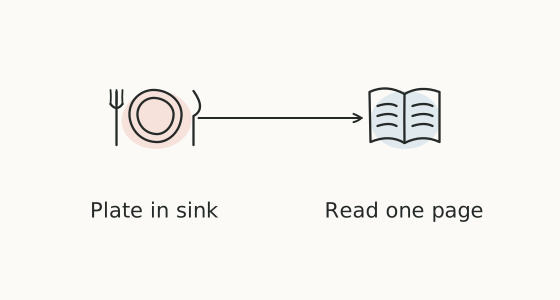
There is very little ambiguity about when to begin.
Play around with these five habit cues and see what works for you.