How to Stick to Your Goals When Life Gets Crazy
Imagine an offseason workout for a college baseball team. Friendly Strongman competitions where the players flip a giant tractor tire, drag a sled full of weights, and generally push, pull, and throw heavy, oddly shaped things.
Occasionally, somebody complains about “not being built for this” or “not training for this type of thing.”
The answer is a useful phrase: “Train for chaos.”
The idea is to make being better prepared next time part of the work. You may never find yourself flipping tractor tires, but you can adapt the philosophy from “train for chaos” to “plan for chaos.” I find that mentality useful when it comes to sticking to goals, especially when life gets busy.
Here's how you can use it.
Plan for chaos
Let's say you have a goal you want to stick to consistently. For example, working out three times per week or meditating for five minutes each morning.
If everything goes as planned, then sticking to your goal isn't too difficult. If you wake up on time, then you should have the extra five minutes to meditate in the morning. If rush hour traffic isn't bad, then you should be able to make it to the gym before going to your kid's performance tonight.
If there aren't any unexpected interruptions, it comes down to getting started.
When life gets busy, phrases like “I wasn't expecting that to happen” start creeping into the day. You end up pushing off the goals that you said were important.
The chaos and unpredictability of life is one of the factors that makes sticking to your goals difficult.
How can you stay consistent when day-to-day life is so unpredictable? How can you plan for chaos?
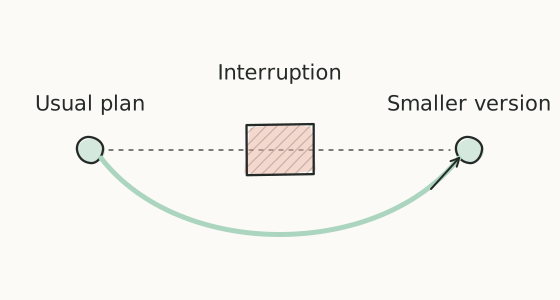
Keep a smaller version available
Consider a writer who publishes an article each week. During an international trip, the writer gets food poisoning. The plan was to publish a useful article that day. The unexpected sickness makes that difficult.
A possible response is to set a clear alternative: if the article is still unfinished by eleven, send a brief update letting readers know it will come later in the week. Then rest and return to it when well enough.
There is still a decision to make about the work and the people expecting it. Having an alternative keeps that decision manageable during a difficult day.
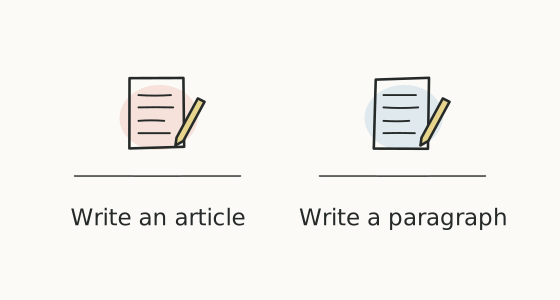
You can use the same idea with everyday habits. Reduce the scope of the action when the full version no longer fits. A shorter workout. A paragraph. A few minutes of stretching. Some situations call for rest and a new time to return. Decide what is reasonable for the situation you are in.
The if-then technique is a useful way to prepare those alternatives.
The if-then technique
It asks you to create a strategy before you need it.
All you need to do is complete this phrase: “If [something unexpected happens], then [my response].”
For example:
- If I don't wake up in time to run tomorrow morning, then I'll run after work.
- If I can't make it to yoga during my lunch break, then I'll take a stretching break this afternoon.
- If a meeting takes my writing time, then I'll work on one paragraph before I finish for the day.
The technique makes you consider the unpredictable circumstances that so often enter our daily lives. You have more options available when the original plan falls apart.
You can also use it to plan for a poor performance. A basketball player could say, “If I miss ten free throws at practice, then I'll visualize myself making twenty free throws before I fall asleep tonight.”
That gives the player a specific response to practice. You have decided how to continue learning when the result is disappointing.
Where to go from here
Having a busy day, dealing with unexpected delays, getting sick, and traveling for work are a few of the interruptions that make habits difficult to keep.
Look at the one that catches you most often. Complete the if-then sentence and check that the response fits your life. If the evening is already full, “I'll do it after work” needs another look. Give the alternative a time and place where it can actually happen.