3 Simple Things You Can Do Right Now to Build Better Habits
It can be difficult to build good habits.
That's especially true if you want to stick with them for the long term. Thankfully, there are a few simple strategies that you can use to build good habits and break bad ones.
There are plenty of approaches out there. These simple steps can help you make progress with many of the goals you have for your health, your work, and your life.
And with that in mind, here are three things that you can do right now to build good habits.
1. Start with a habit that is so easy you can't say no
An important part of building a new habit is staying consistent. Sustained effort is what makes the difference over time.
For that reason, when you start a new habit it should be so easy that you can say yes to it. In fact, when starting a new behavior it should be so easy that it's almost laughable.
- Want to build an exercise habit? Your goal is to exercise for one minute today.
- Want to start a writing habit? Your goal is to write three sentences today.
- Want to create a healthy eating habit? Your goal is to prepare one healthy meal this week.
It doesn't matter if you start small because there will be plenty of time to pick up the intensity later. You don't need to join a CrossFit gym, write a book, or change your entire diet at the very beginning.
It's easy to compare yourself to what others are doing or to feel the urge to optimize your performance and do more. Give yourself some time to stick with the small version. Then, once you are on a roll and remaining consistent, you can worry about increasing the difficulty.
Doing something impressive once or twice isn't going to matter much if you never return to it. Make your new habit easy enough to repeat.
2. Take some time to understand exactly what is holding you back
A teacher named Jane wanted to exercise consistently, but had always thought that she was, in her words, “the type of person who didn't like to workout.”
Jane decided to break the habit down. She didn't like the hassle of getting ready for the gym, driving somewhere for twenty minutes, and then working out. She also didn't enjoy going to a public place and working out in front of other people. Those were the barriers that prevented her exercise habit.
Once she realized this, Jane thought about how she could make exercising easier. She bought a yoga video and started exercising at home two nights per week.
Her school also offered an exercise class for the faculty after school. She started going to that class because it meant that she didn't have to drive somewhere else or put in a lot of prep time just to work out.
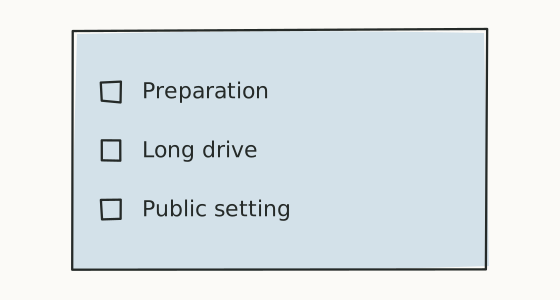
Jane described sticking with her workout routine for months. She said:
“You might not be able to fix everything you don't like, but figuring out how to work around one or two of those hurdles might provide the push you need to get over the hump and stick with your goals.”
It helps to understand exactly what is holding you back.
You might think that you're the type of person who doesn't like working out or the type of person who is unorganized. Break the habit down into smaller pieces and think about which areas are preventing you from becoming consistent.
Once you know the specific parts of the process that hold you back, you can begin to develop a solution to that problem.
3. Develop a plan for when you miss
Dan John, a strength and conditioning coach, often tells his athletes, “You're not good enough to be disappointed.”
The same question is worth asking when you build a new habit. What were you expecting? To succeed without fail from the very beginning? To be perfect even when people who have been doing this for years make mistakes on a regular basis?
Focus on developing a plan to get back on track as soon as you reasonably can. Here are a few strategies that might help:
- Set a schedule, so the next opportunity is already there.
- Focus on becoming the type of person who returns to the habit.
- Use “never miss twice” as a reminder to return.
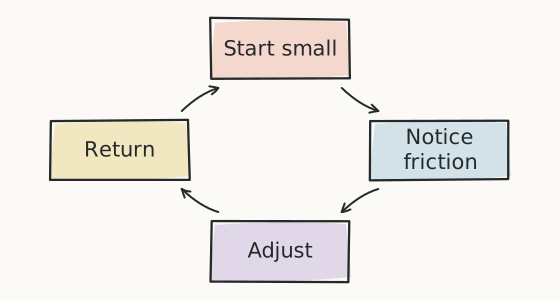
That last idea needs room for real life. Illness, injury, and other responsibilities may keep you away for longer. You can plan to return when you are able without treating the interruption as a failure.
For an ordinary missed day, I find the “never miss twice” mindset useful. Maybe I'll miss one workout, then return at the next planned session. Maybe I'll forget to meditate today, but tomorrow morning I'll be oozing with Zen.